


Core Principles Guiding Scandinavian Architecture and Design
When considering Scandinavian architecture and design, many think of bright and clean spaces, rustic accents, and simple curves—beautiful, functional, and practical pieces and places that help demonstrate what’s most important to Scandinavian people. This is all correct. Fundamentally, though, we could argue that Scandinavian architecture and design is about respect: for our heritage, for the user, for other people, and for the environment.
Craftsmanship: Honoring the Past
To know where you’re going, you need to know where you’ve come from. Even today, traditional techniques are at the forefront of Scandinavian design. One example—the Slow Chair by Søren Ulrik Petersen harks back to Golden Age designers such as Hans Wegner, yet it was made in 2000. The wooden beam that curves around the back of the chair is a terrific feat of craftsmanship, but in the hands of this classically trained cabinet maker, it looks effortless. Whether it’s a chair or our own European linen duvet covers, Scandinavian design insists upon attention to detail at every stage of the production process.
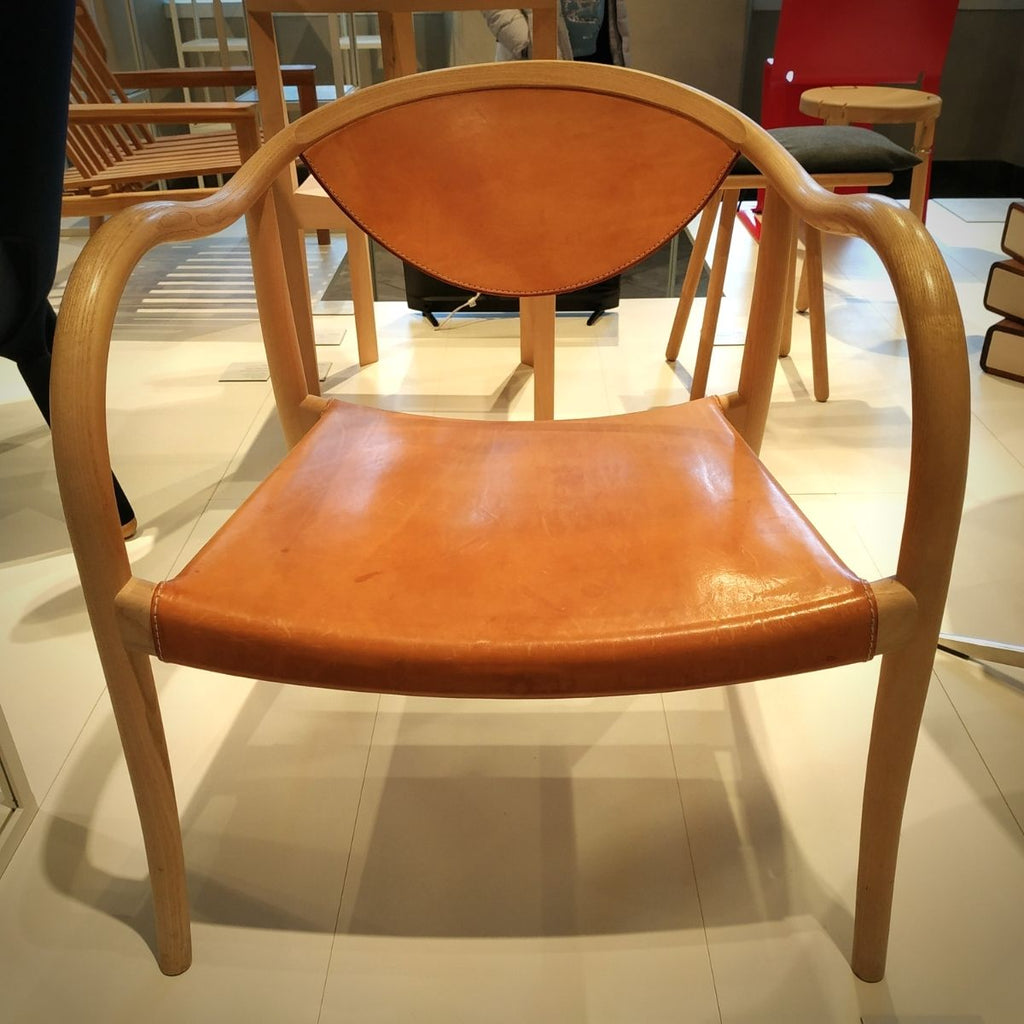
"Slow Chair by Søren Ulrik Petersen in 2000." Photo credit: guoyunhe
Simplicity: Putting the User First
Scandinavian design exists to serve the user, not to satisfy the designer’s vanity. The unassuming Washing-Up Bowl by Danish designer Ole Jensen costs far more than a regular basin yet remains popular almost 20 years after its launch in 2002. It has a flexible rubber construction, which Jensen conceived after noticing that normal washing-up bowls did not accommodate irregular or fragile items. It’s beautiful in its simplicity—function is the first consideration but it never comes at the expense of form.
Democracy: Design for All
Scandinavian design is democratic: the advantages of design are reaped by all, regardless of gender, ability, or means. This applies not only to the consumer but to the designer as well. Even in the 1930s, gender was no barrier to Sylvia Stave and Greta Magnusson-Grossman, both major contributors to Swedish design. Today, the all-female Swedish collective Misschiefs aims to empower female designers who lost their studios during the coronavirus pandemic. Their punk-inspired works, such as Frida Fjellman’s glass totems and Kajsa Willner’s tin vases, challenge the typical white-on-grey Scandinavian aesthetic.

"Room Divider Screen: Greta Magnusson Grossman, 1952." Photo credit: JoeInSouthernCA.
Sustainability: Designing A World Worth Living In
Sustainability is now a core focus of Scandinavian design, a natural progression from the inherent role of nature. Some are thinking big: Danish architect Bjarke Ingels, for instance, has drawn up a plan to fix climate change. His “Masterplanet” proposes floating cities, an international renewables power grid, and a huge plastic recycling plant in the U.S. He has already tested his ideas on a smaller scale, such as the recently completed waste-to-energy plant in Copenhagen.
Other designers—including Stockholm-based Louise Liljencrantz and Kristin Rudenstam, who recently launched the Veermakers label—have simply doubled down on qualities of durability and timelessness, ensuring that their pieces will be treasured as heirlooms rather than ending up in landfill.

At The Modern Dane, creating sustainable Danish bedding was the concept we were founded on. Our European linen duvet covers last for decades and use carbon-negative European Flax. Nordic nature-inspired prints also help set our Scandinavian style duvet covers apart—browse our full collection here.
What does Scandinavian design mean to you? Is there a particular Scandinavian-designed object that you can’t live without? Let us know on Instagram, Pinterest, Facebook or Twitter!
Read more

How Your Bed Can Affect Your Sleep
A good night’s sleep is oh-so-important for better health. See what adjustments you can make to your bed to ensure you sleep beautifully, every single night.
Read more
How To Decorate Your Guest Bedroom, Scandi-Style
Looking forward to having out-of-towners visit again? See how to add Scandinavian design to your guest bedroom, creating an inviting space for guests to stay.
Read more

Leave a comment
This site is protected by hCaptcha and the hCaptcha Privacy Policy and Terms of Service apply.